
From IPO King to Web3 Pioneer: Hong Kong's Blueprint for a Digital Asset Future
November 6, 2025
Introduction: A Pivot from a Position of Strength
Hong Kong's capital markets have demonstrated remarkable strength in 2025, decisively reclaiming the coveted top spot in global IPO fundraising. With over US$26 billion raised in the first ten months, the city has powerfully reaffirmed its status as a world-leading international financial center[1]. Yet, this achievement is not a final destination; it is the solid foundation from which Hong Kong is launching its next ambitious chapter.
This resurgence is not superficial; it is built on substantive market activity that has left global competitors behind. In the first half of the year alone, fundraising surged by an extraordinary 700% compared to 2024, placing Hong Kong firmly ahead of the US exchanges, which ranked second and third[7]. This momentum was powered by significant mega-deals, including the second-largest IPO globally in 2025, and a continuous stream of A+H listings from mainland companies, which accounted for half of all funds raised. With a record-breaking pipeline of nearly 300 active applicants pending listing, the market demonstrates immense and sustained confidence from global and mainland businesses, proving that Hong Kong's capital markets are not just thriving but are a premier choice for major international fundraising[7].
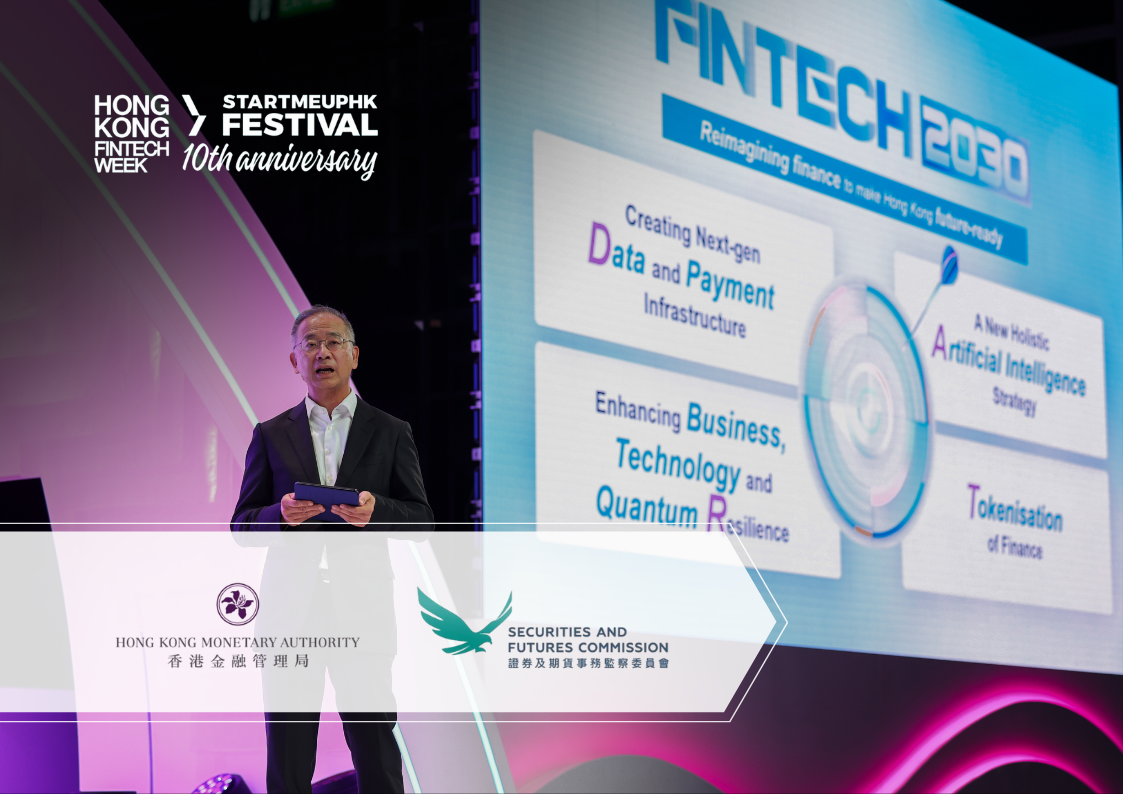
Building on this momentum, the 10th anniversary of Hong Kong Fintech Week became the stage for unveiling this future blueprint. Two landmark announcements signal a clear and ambitious pivot: the Hong Kong Monetary Authority (HKMA) launching its forward-looking "Fintech 2030" strategy[2], and the Securities and Futures Commission (SFC) releasing a pivotal circular on shared liquidity for virtual asset trading platforms (VATPs)[3]. This is Hong Kong's strategic play to extend its leadership from traditional finance into the next frontier of a Web3-enabled financial world.
For compliance-focused firms and financial institutions, this transition is paramount. It represents a calculated evolution in Hong Kong's regulatory posture, aiming to build a global hub for digital assets. This article provides an in-depth analysis of the SFC's new circular and its alignment with the broader Fintech 2030 vision, offering actionable insights for navigating this new chapter.
Decoding the SFC Circular: The Gateway to Global Liquidity
Released on the first day of Fintech Week, the SFC's circular is the cornerstone of this new strategy. It permits licensed VATPs in Hong Kong to connect their order books with those of their affiliated, regulated platforms in other jurisdictions. This creates a "Shared Order Book," a unified pool of liquidity that allows orders from different platforms to be matched and executed seamlessly. While the headline is about enhancing liquidity, the true substance lies in the meticulously crafted regulatory guardrails designed to manage the inherent cross-border risks.
This initiative is a direct implementation of Pillar A (Access) of the SFC's previously announced ASPIRe roadmap[4], a strategic plan to future-proof Hong Kong's virtual asset ecosystem. The circular is the first concrete step to "integrate Hong Kong with global liquidity," demonstrating that this is not a reactive policy but a deliberate move within a larger strategic framework.
The SFC has prescribed a set of robust requirements that go far beyond a simple green light for shared liquidity. These measures provide a clear indication of the regulator's priorities:
"The heightened risks arising from a Shared Order Book operation must be adequately managed to safeguard client interests and uphold market integrity. Accordingly, Platform Operators offering Shared Order Books are required to implement the measures set out below."
– SFC Circular on shared liquidity by virtual asset trading platforms[3]
Key compliance and risk management requirements include:
| Requirement | Description | Significance for Compliance |
|---|---|---|
| Eligible Partners | The overseas affiliate platform (OVATP) must be licensed in a FATF member jurisdiction with regulations substantially aligned with FATF and IOSCO standards. | Imposes a strict due diligence burden on Hong Kong VATPs to vet their global partners' regulatory standing. |
| DVP Settlement | A delivery-versus-payment (DVP) mechanism is mandatory to ensure the simultaneous exchange of assets, minimizing settlement risk. | Requires sophisticated operational workflows to manage the timing of cross-border asset transfers, including from cold to hot wallets. |
| Pre-funding & Limits | All orders must be fully pre-funded, and an "Unsettled Trade Limit" must be established and monitored in real-time. | Shifts the risk model from post-trade settlement to pre-trade verification, demanding robust automated checks. |
| Reserve Fund | A reserve fund, held on trust in Hong Kong, must be maintained to cover client losses from settlement failures, sized at no less than the Unsettled Trade Limit. | Creates a tangible financial backstop for investor protection, placing direct financial responsibility on the Hong Kong operator. |
| Unified Surveillance | A joint market surveillance program must be operated with the OVATP across the entire shared order book, overseen by a designated Responsible Officer in Hong Kong. | Prevents regulatory arbitrage and ensures that market abuse can be detected and addressed across jurisdictions in a coordinated manner. |
These specific, granular requirements show a regulator that has learned from the failures of unregulated global platforms and is intent on building a framework that balances the benefits of global liquidity with the non-negotiable principles of investor protection and market integrity.
The Bigger Picture: Alignment with HKMA's Fintech 2030
The SFC's circular does not exist in a vacuum. It is a critical puzzle piece that fits perfectly into the HKMA's newly announced "Fintech 2030" strategy, a comprehensive plan built on four pillars known as "DART"[2].
Data & Payment Infrastructure
The shared liquidity framework directly enhances the market's data and payment infrastructure by creating deeper, more reliable order books. This improved market efficiency is a prerequisite for a sophisticated financial center.
Artificial Intelligence
While not a direct link, the unified surveillance requirement will generate vast, cross-jurisdictional datasets. This provides a rich foundation for developing more advanced, AI-driven tools for market monitoring and risk management, aligning with the AI² Strategy.
Resilience
The circular's stringent risk management controls—from DVP settlement to the mandatory reserve fund—are a direct contribution to the resilience of Hong Kong's financial ecosystem. It hardens the virtual asset sector against the kind of settlement failures that have plagued less-regulated markets.
Tokenisation
This is perhaps the most crucial link. A vibrant market for tokenised assets, especially the Real-World Assets (RWAs) that the HKMA is keen to promote, is impossible without deep and stable liquidity. The SFC's move to unlock global liquidity provides the essential foundation upon which a successful tokenisation ecosystem can be built.
By providing the liquidity, the SFC is effectively building the highways that will carry the tokenised vehicles envisioned in the Fintech 2030 roadmap.
A Global Perspective: Hong Kong's Strategic Play
Hong Kong's approach is particularly insightful when compared to other major financial hubs. It carves out a unique position that is neither as restrictive as Singapore's nor as broadly permissive as the EU's internal market.
| Jurisdiction | Cross-Border Approach | Primary Focus | Key Characteristic |
|---|---|---|---|
| Hong Kong | Controlled Global Integration | Balancing global liquidity access with robust safeguards | A selective, risk-managed gateway between East and West. |
| EU (MiCA) | Single Market Harmonization | Eliminating internal regulatory fragmentation | "Passporting" rights allow seamless operation within the 27 EU member states.[5] |
| Singapore | Restrictive Supervision Model | Ensuring effective supervisory oversight | Generally does not license firms that only serve overseas customers.[6] |
| United States | Fragmented Evolution | Seeking regulatory clarity across multiple agencies | A complex, evolving landscape with no single, unified federal framework yet. |
| UAE (Dubai) | Innovation Hub Model | Attracting global businesses with clear rules | A proactive, enforcement-led approach to building a trusted crypto hub. |
Hong Kong's Competitive Edge:
More Open than Singapore: While Singapore has prioritized supervisory control by limiting the activities of offshore-only digital token service providers, Hong Kong is actively building a regulated bridge to global markets. This makes it a more attractive base for global platforms looking to serve a wider Asian client base under a clear regulatory umbrella.
More Focused than the EU: The EU's MiCA framework brilliantly solves for the single market, but its external-facing approach is less defined. Hong Kong's model is explicitly designed to connect its regulated market with other regulated markets globally, offering a more targeted solution for cross-regional liquidity.
More Agile than the US: By establishing a clear and comprehensive framework now, Hong Kong gains a significant first-mover advantage over the US, where the path to federal regulatory clarity remains a complex and lengthy process.
This comparative analysis reveals that Hong Kong is making a strategic play to position itself as the world's premier trusted gateway for virtual asset liquidity—a jurisdiction that understands global finance and has the regulatory sophistication to manage its risks.
Implications for Compliance Professionals
For Studio AM clients and financial institutions, the circular creates immediate compliance obligations. VATPs seeking to implement shared order books must address four critical operational areas:
01
FATF-Aligned Partner Verification
Establish documented processes to verify that overseas affiliate platforms hold valid licenses in FATF member jurisdictions with regulations aligned to FATF and IOSCO standards. Maintain ongoing monitoring of partner regulatory status changes.
02
DVP & Pre-Funding Infrastructure
Deploy delivery-versus-payment mechanisms with real-time pre-funding checks. Calculate and monitor Unsettled Trade Limits continuously. Coordinate cold-to-hot wallet transfers to ensure simultaneous asset and payment exchange.
03
Reserve Fund Calculation
Size and maintain a Hong Kong-based trust fund equal to or exceeding the Unsettled Trade Limit. Document fund adequacy assessments and establish protocols for client loss compensation from settlement failures.
04
Unified Surveillance Program
Implement joint market surveillance covering the entire shared order book. Appoint a Hong Kong-based Responsible Officer with authority over cross-jurisdictional abuse detection and reporting mechanisms.
Conclusion: Building the Future on a Foundation of Trust
The SFC's circular on shared liquidity is far more than a minor policy tweak. It is a bold, strategic, and meticulously planned move that reinforces Hong Kong's ambition to lead the next phase of digital finance. By building on its proven strength in traditional capital markets and synchronizing its efforts with the HKMA's Fintech 2030 strategy, Hong Kong is creating a regulatory moat that is both welcoming to innovation and fortified against risk.
For compliance professionals, the message is clear: the landscape is becoming more sophisticated, and the bar for regulatory excellence is being raised. Navigating this environment will require deep expertise and a proactive approach to compliance. The opportunities are significant, but they belong to those who are best prepared to operate in a world-class, regulated Web3 financial hub.
References
[1] news.gov.hk. (2025, November 4). HK tops IPO fundraising globally. https://www.news.gov.hk/eng/2025/11/20251104/20251104_123809_273.html
[2] The Hong Kong Monetary Authority. (2025, November 3). The HKMA Unveils "Fintech 2030" at the Hong Kong FinTech Week 2025. https://www.hkma.gov.hk/eng/news-and-media/press-releases/2025/11/20251103-3/
[3] Securities and Futures Commission. (2025, November 3). Circular on shared liquidity by virtual asset trading platforms. https://apps.sfc.hk/edistributionWeb/gateway/EN/circular/intermediaries/supervision/doc?refNo=25EC56
[4] Securities and Futures Commission. (2025, February 19). "A-S-P-I-Re" for a brighter future: SFC's regulatory roadmap for Hong Kong's virtual asset market. https://www.sfc.hk/en/News-and-announcements/Policy-statements-and-announcements/A-S-P-I-Re-for-a-brighter-future-SFCs-regulatory-roadmap-for-Hong-Kongs-virtual-asset-market
[5] European Securities and Markets Authority. Markets in Crypto-Assets Regulation (MiCA). https://www.esma.europa.eu/esmas-activities/digital-finance-and-innovation/markets-crypto-assets-regulation-mica
[6] Monetary Authority of Singapore. (2025, June 6). MAS Clarifies Regulatory Regime for Digital Token Service Providers. https://www.mas.gov.sg/news/media-releases/2025/mas-clarifies-regulatory-regime-for-digital-token-service-providers
[7] KPMG. (2025, October 9). Hong Kong set to reclaim title as 2025 top global IPO hub, says KPMG. https://kpmg.com/cn/en/home/media/press-releases/2025/10/hong-kong-set-to-reclaim-title-as-2025-top-global-ipo-hub-says-kpmg.html